Domaine Villain
The Terroir

The same soil, not the same wine.

In Beine, a wine is born not only of the weather or of the work in the vines. It takes root in a petrified Jurassic seabed. A reading of the Kimmeridgian matrix, from the plateaus to the slopes — and of what really makes the difference between one estate and the next.

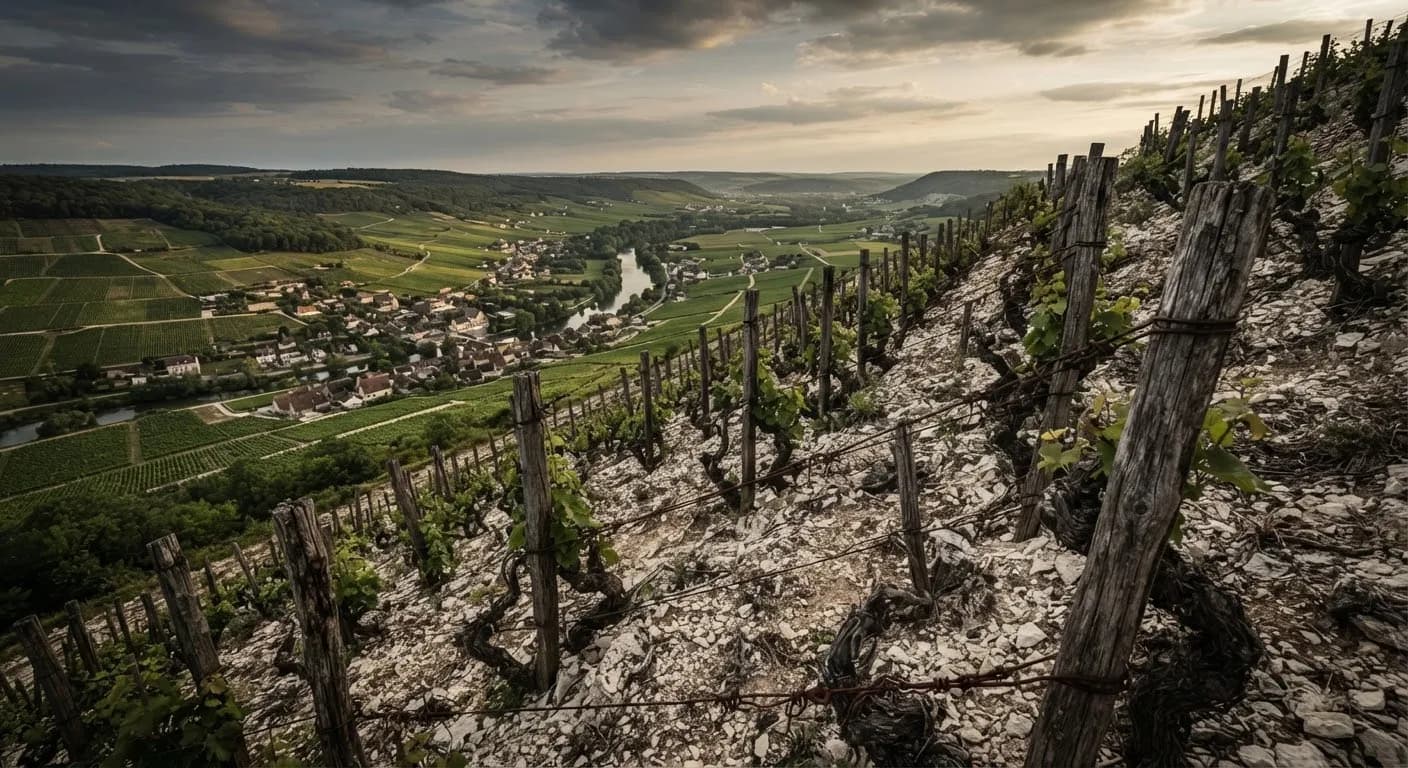
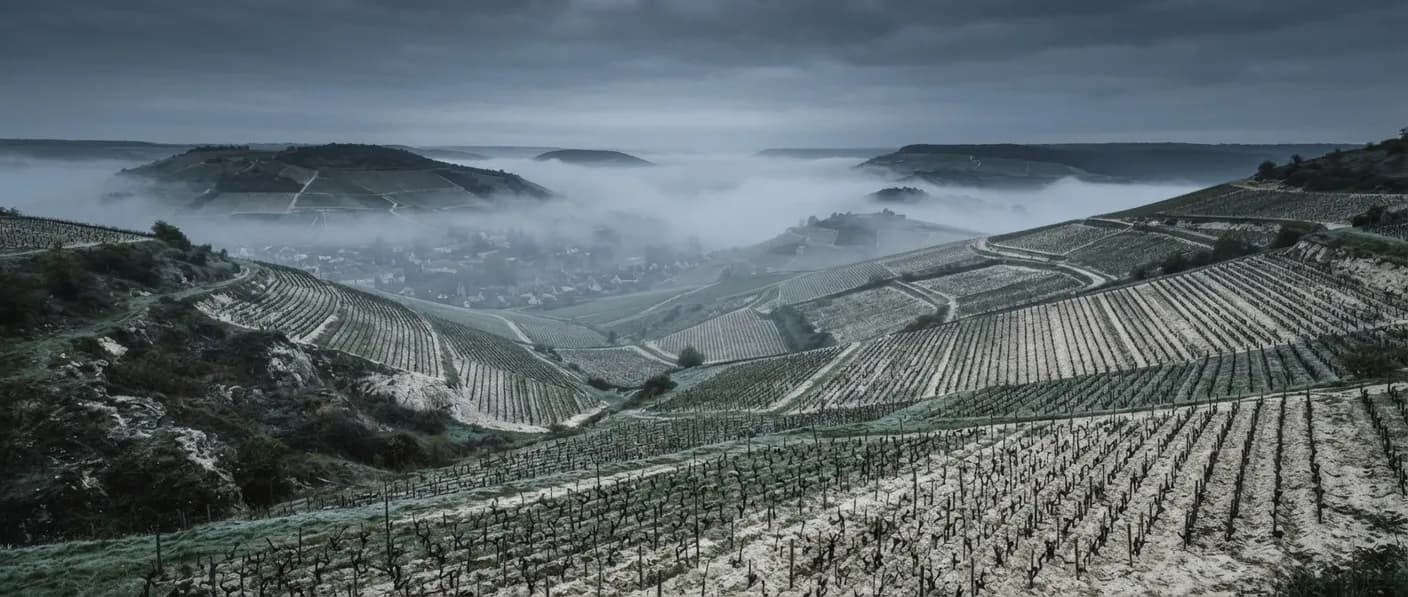
Panoramic dawn photograph over the hills and vineyards of Beine: morning mist in the bottoms of the combes, geometric rows of vines on pale limestone, a slate-coloured sky and cold light
Vines of Beine at dawnMorning mist over the Kimmeridgian slopes.
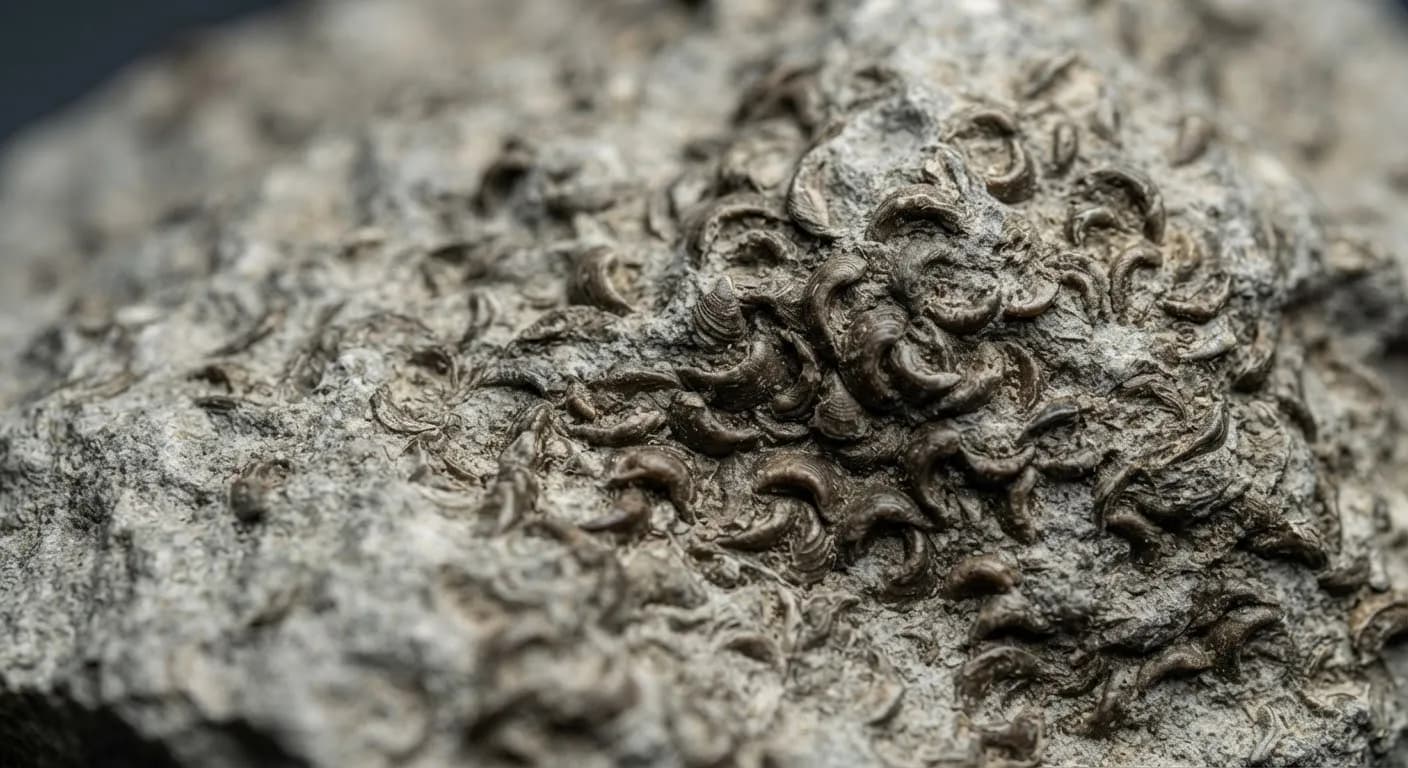
Rigorous macro shot of Kimmeridgian limestone from Chablis: a compact mass of tiny fossilised Exogyra virgula oyster shells embedded in mineral grey marl, raw and sharp textures, cold lighting
Kimmeridgian marly limestone with Exogyra virgula — the original matrix.
The soil

The Kimmeridgian, simply.

Some 150 million years ago, a warm, shallow sea covered this part of the basin. Its waters sheltered countless small shells — the fossil oysters Exogyra virgula. Their accumulation fused with the grey clay muds into the Kimmeridgian marls we call Chablis chalk.

It is this marly limestone, full of fossils, that gives Chablis its salinity, its uprightness and that distinctive mineral profile. Kimmeridgian rock is the geological signature of Chablis.

Age & stage
Upper Jurassic (Kimmeridgian)
Signature fossil
Exogyra virgula
Parcel geography

From plateaus to slopes.

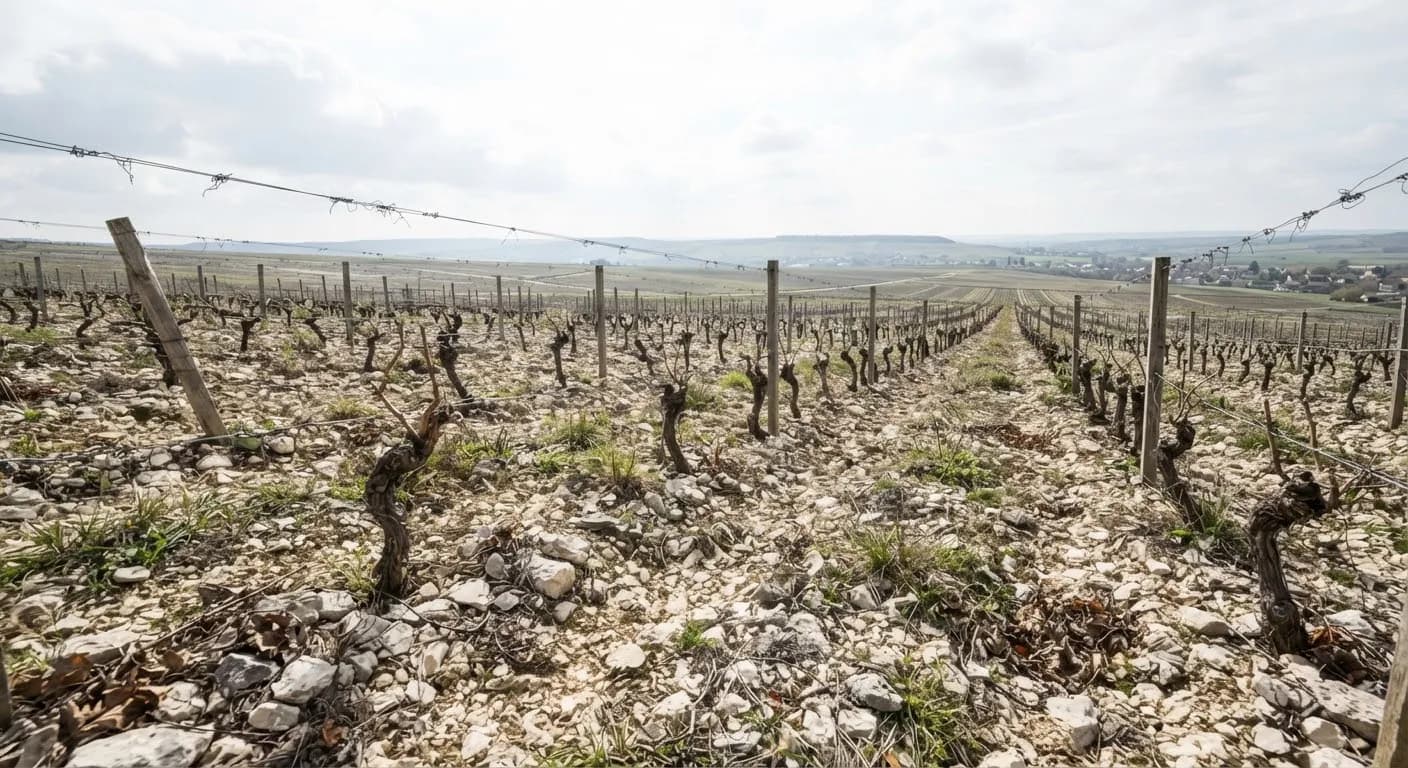
Petit Chablis vines on the high limestone plateau of Beine under a piercing white light: rocky ground scattered with limestone chippings, clear horizon, pure windy atmosphere
Limestone plateaus of Beine — plateau exposure
Petit Chablis AOC

The plateaus

On the plateau, sheltered from the wind. Shallow limestone soils, 7,700 vines per hectare, single Guyot, ten-year-old vines. The most mineral and freshest wine of the range.

Area
5 hectares
Exposure
Plateau
Soil
Shallow limestone
Planting density
7,700 vines / ha
Pruning
Single Guyot
Average vine age
10 years
Yield
60 hl / ha
Gentle slope of Chablis vines facing south-east, rows of forty-year-old vines pruned with rigour, grey-beige marly soils, calm autumnal atmosphere
South-east slopes of Beine — south-east exposure
Chablis AOC

The slopes

Just below the plateaus, the soils are a little deeper, richer in earth and in clay. Roundness and a little body settle in, without ever losing freshness. Forty-year-old vines, 6,000 per hectare.

Area
13 hectares
Exposure
South-east slopes
Soil
Deeper, richer in earth and in clay
Planting density
6,000 vines / ha
Pruning
Double Guyot
Average vine age
40 years
Yield
60 hl / ha
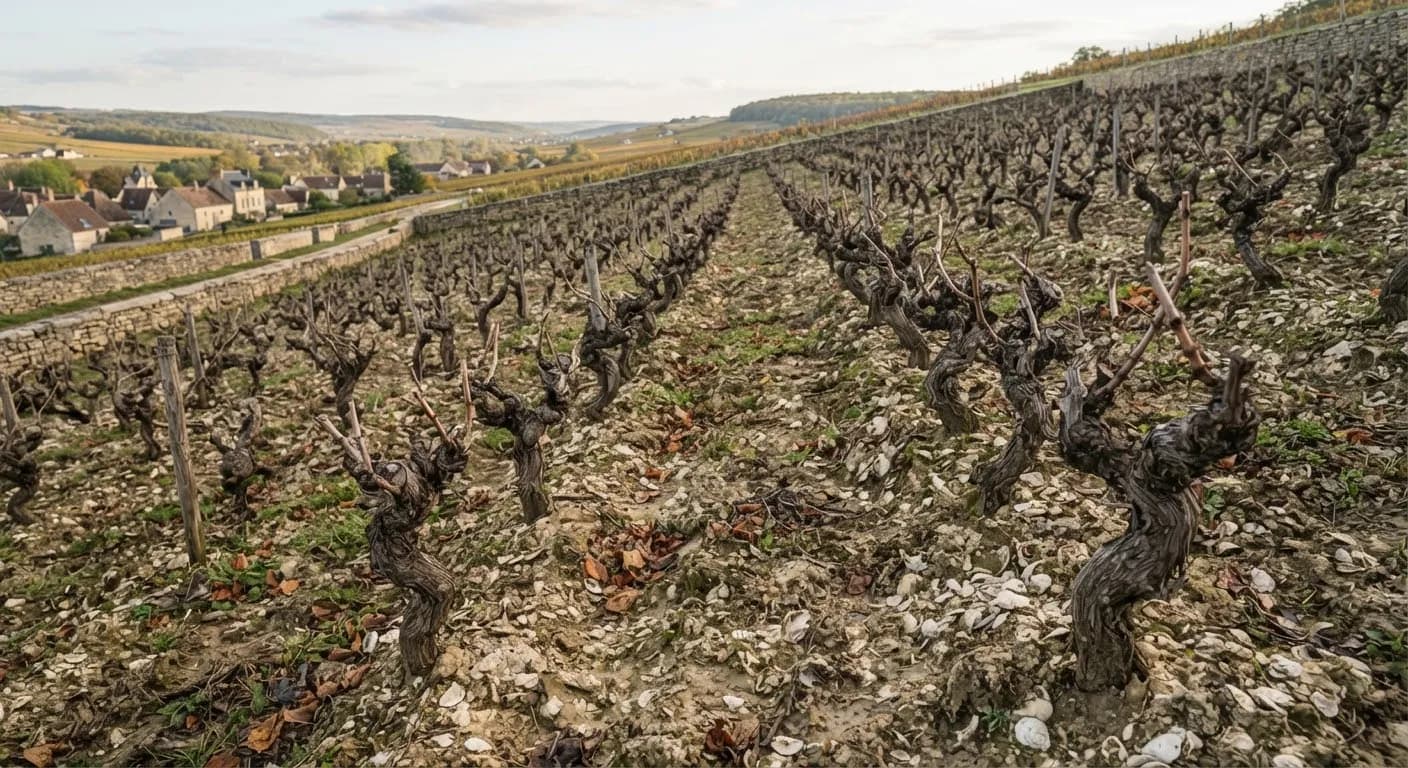
The Beauroy slope in Chablis: a very old vine planted in 1949 on a soil of white limestone scree and pure Kimmeridgian marls, cold late-afternoon light
The Beauroy slope — planted in 1949, fully south-facing
Chablis 1er Cru Beauroy

The Beauroy slope

A parcel planted in 1949 by our grandparents, on a fully south-facing slope. Very old vines, low-yielding but with highly concentrated aromas: around 1,000 bottles a year.

Area
13 ares
Exposure
Fully south
Soil
Kimmeridgian marls
Planting density
6,000 vines / ha
Pruning
Double Guyot
Vine age
75 years (planted in 1949)
Yield
50 hl / ha
Production
~1,000 bottles / year
What makes the difference

From one parcel to the next, the terroir is exactly the same as your neighbour's.

It is the hand of the grower that makes the difference. Ours is there all year round: pruning, replanting, trellising, harvest, ageing, through to fining and filtration before bottling. No shortcuts. That work, and only that work, explains why two neighbouring wines are not alike.

Not organic, not biodynamic, not HVE — and that is a deliberate choice.

Reasoned agriculture

We farm under reasoned agriculture, a completely deliberate choice. In 2024, mildew pressure was such that growers bound by strict specifications could not use strong curative products: many of them lost their crop. Under reasoned agriculture we keep the freedom to use an effective treatment when there is no other option. That is how we brought in a crop in 2024 — with fine acidity, which makes it a wine to keep.

Treatment philosophy

Treatment only when necessary, to save the crop.

0 % chemical weeding

Soil maintenance is 100 % mechanical. We will never spread chemicals for nothing. It means more passes, more time, more fuel — but it is the only way we accept to work our living soils.

Agronomic practice

Under-vine weed removal (cavaillonnage) and inter-row cultivation, 100 % mechanical.

Annual cycle

A year of work.

The same year, started afresh every spring.

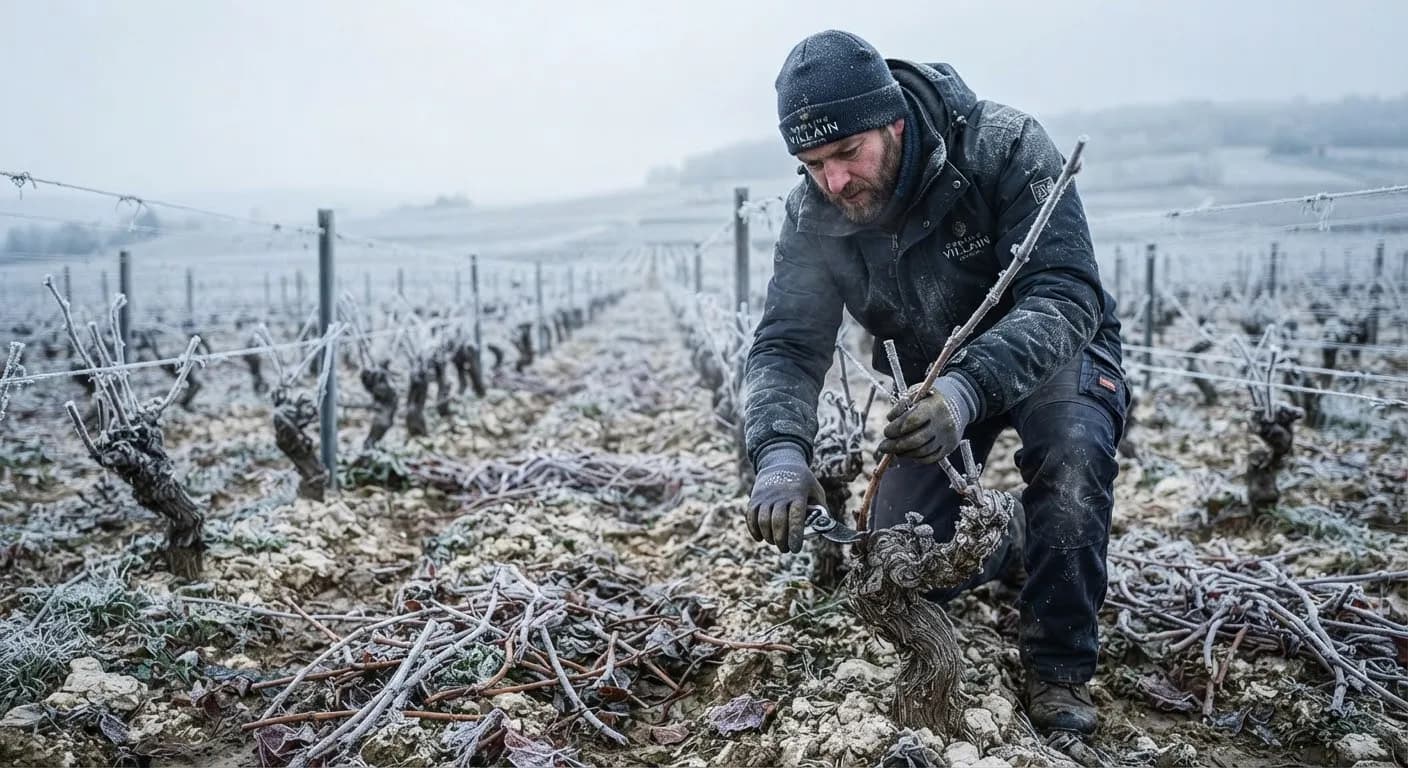
  • Grower pruning a Chablis vine in the middle of winter under white frost: shears in a gloved hand, cut shoots falling on the frozen limestone soil, glacial and rigorous atmosphere
    Winter

    November to April — Pruning

    We start pruning between 1 and 11 November, running until March or April depending on the year. Grapes harvested in September are in full malolactic fermentation, which ends in December; we sulphur the wines and leave them to age on their own lees.

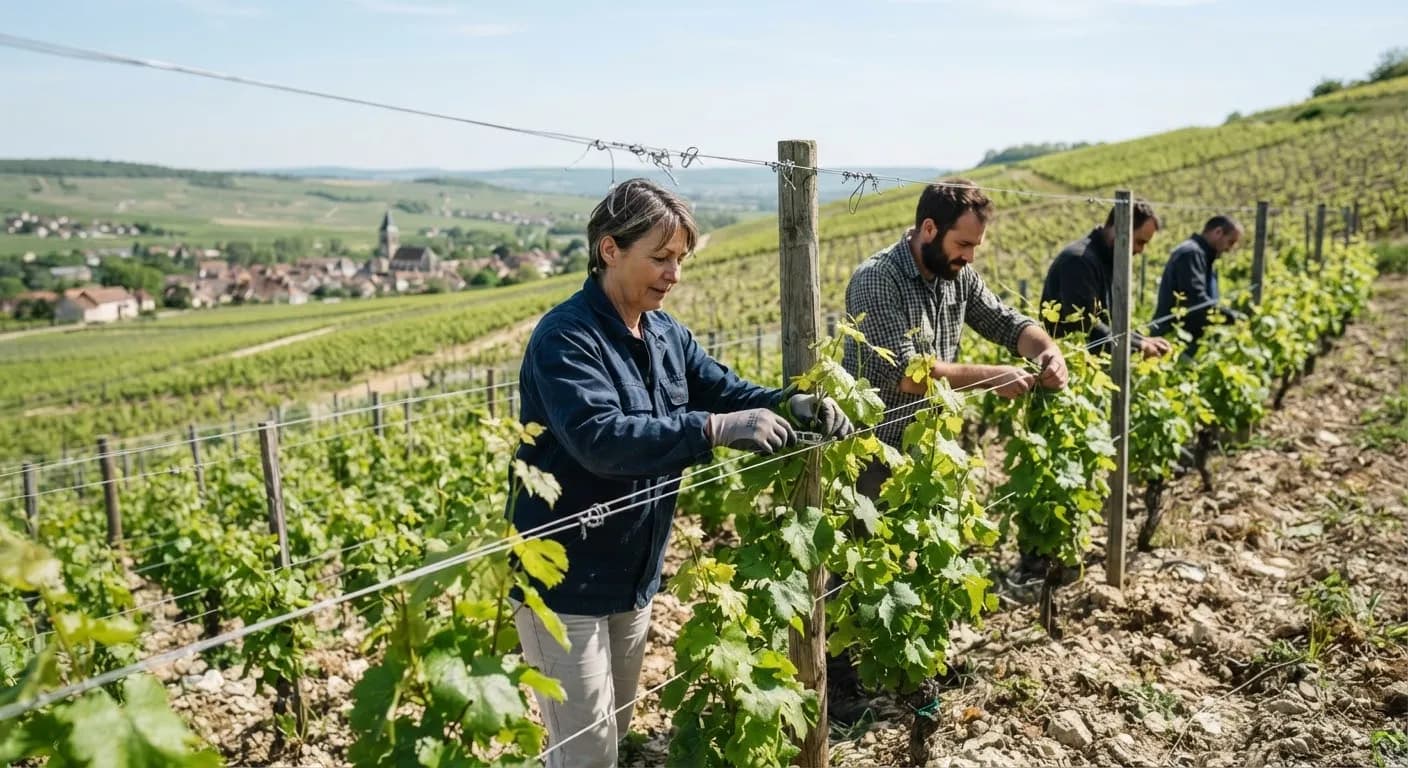
  • Trellising work in spring on the slopes of Chablis: vigorous young green shoots guided between galvanised wires, clear spring sky and growers at work
    Spring

    April to July — Trellising

    Straight after pruning, we replant the missing vines — filling the gaps with young plants — and repair the trellis. Then the bending down, and the busiest season of the year: lifting the wires, trimming, keeping the rows in order.

  • Stainless steel tank cellar of Domaine Villain in Beine prepared for bottling: rows of steel vats, dark green glass bottles, floor cleaned after rinsing
    Summer

    August — Bottling

    The bottling month, before harvest. We empty the cellar, clean and disinfect all the equipment.

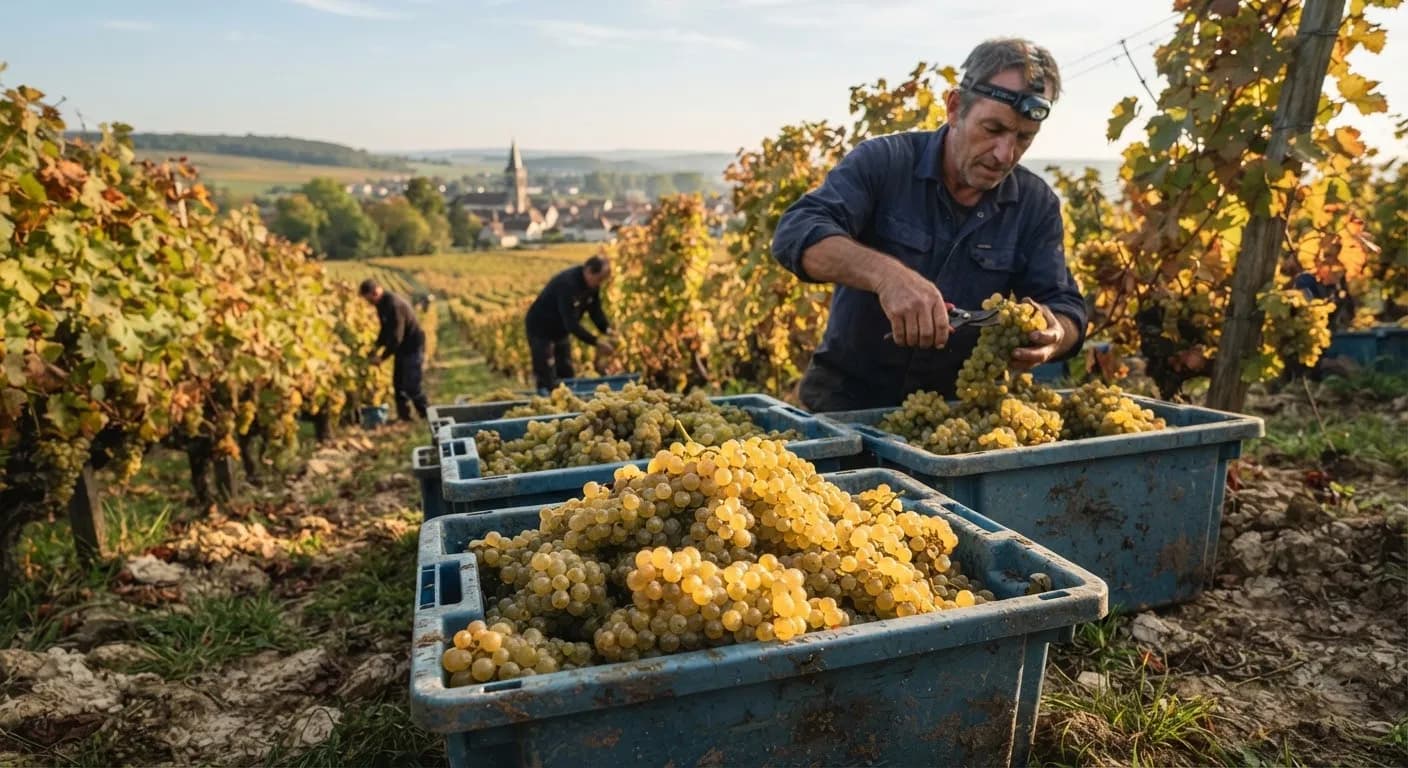
  • Harvest at Beine in mid-September: golden, translucent Chardonnay bunches just picked resting in the harvest bins, limestone dust and morning dew
    Autumn

    September — Harvest

    We start around 15 September, for a fortnight: 10 to 12 days on our own parcels, plus a few days of mechanical harvesting as a contractor for other growers.